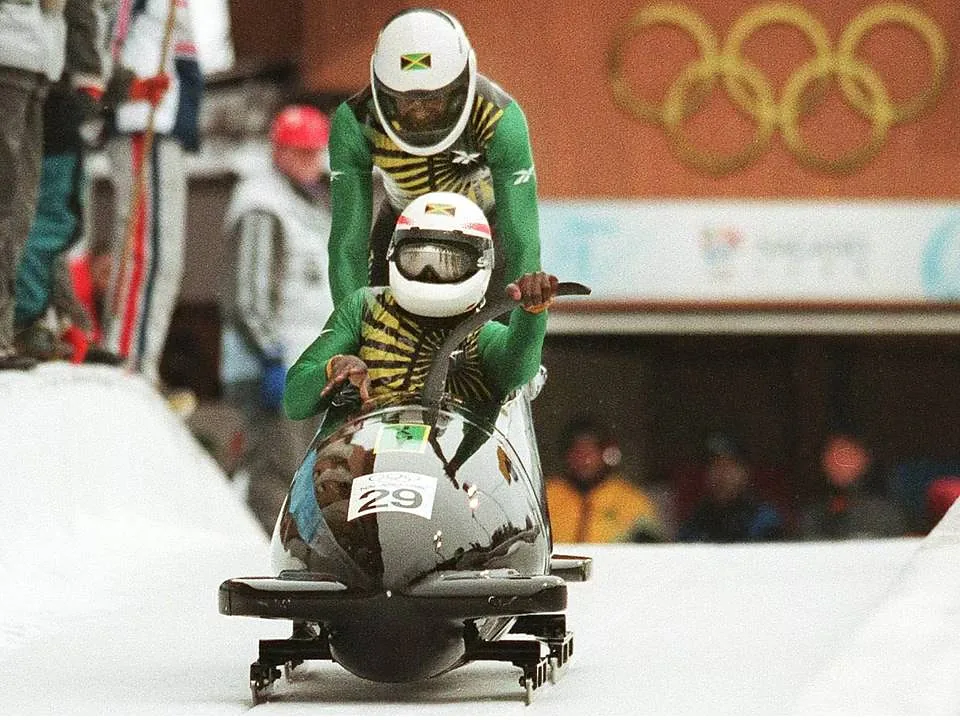
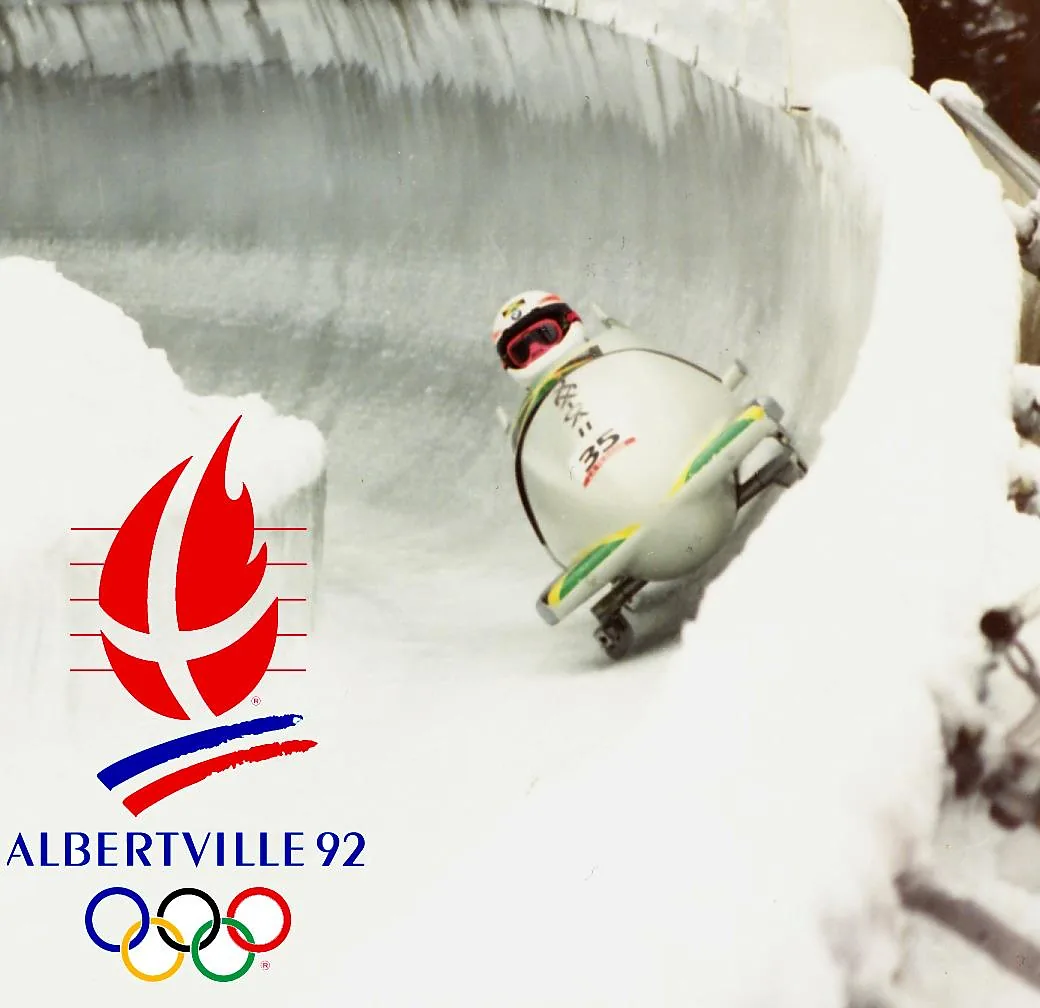
People often ask me what happened when we crashed at the 1988 Winter Olympics in Calgary.
Most expect me to start with the moment our sled overturned.
But when I think back to that day, my memories begin several hours earlier, before we'd even left the Olympic Village.
An Unusual Morning
The morning started with Michael White forgetting his helmet.
We discovered this as we were preparing to leave the Olympic Village for the track, so there was a mad scramble to retrieve it before the coach departed.
Now, there are certain things you can afford to forget when you're going somewhere.
Your helmet, when you're about to race down an icy mountain at 85 miles an hour, is not one of them!
Fortunately, we managed to get it, and when we arrived at the track, everything proceeded more or less according to our normal routine.
We took the sled to the top of the track and began preparing it for the race.
Meanwhile, our driver, Dudley Stokes, went to walk the track, as drivers typically do before a competition. It's an opportunity to study the corners, assess the conditions, and mentally prepare for the run.
The rest of us waited in the warm house at the start.
When Dudley returned, he looked miserable.
He'd slipped on the ice while walking the track and injured his collarbone area.
Think about that.
We were preparing to race down one of the fastest bobsled tracks in the world, and our driver had managed to injure himself simply walking on the ice!
Fortunately, a physiotherapist from the British team came to his assistance.
He applied some sort of magic spray, worked on Dudley, and got him ready to compete.
I've always appreciated that gesture. We may have been competing against one another, but when someone needed help, the British team didn't hesitate to provide it.
Between Michael's forgotten helmet and Dudley's injury, it certainly hadn't been an ordinary morning.
But there was one more development that I wouldn't learn about until later.
As we stood at the start preparing for our run, George Fitch, one of the men responsible for creating the Jamaican bobsled team, approached Dudley.
George was upset because our coach, Howard Siler, had left the Olympics and returned to the United States.
I can understand George's disappointment.
But I've often wondered why he chose that particular moment to share the news with Dudley.
A bobsled driver needs absolute concentration before a run. He's about to guide a sled through a series of high-speed corners where the smallest mistake can have serious consequences.
That's hardly the ideal time to receive unsettling news about your coach.
Now, I don't know whether that conversation affected Dudley's concentration. I'm certainly not suggesting it caused the crash.
But looking back, I wish that conversation had taken place at another time.
Poetry on Ice
Eventually, it was time to race.
We took our positions at the start, focused on the sled, and prepared to push.
Then we exploded off the starting blocks.
And what a start we had!
We recorded the seventh-fastest push start of the Olympic competition.
Seventh fastest!
Not bad for four Jamaicans who, just a few months earlier, could barely stay on their feet on ice.
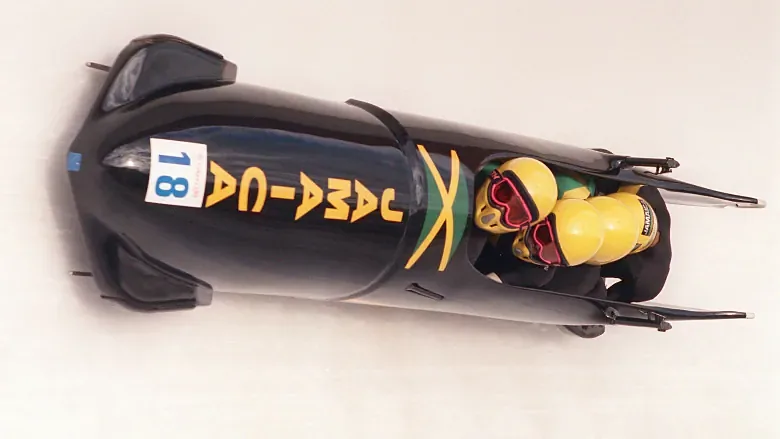
We loaded into the sled and headed down the track.
Everything felt smooth.
There's a wonderful rhythm to a good bobsled run, when the push comes together, the loading is clean, and the sled moves smoothly through the corners.
I call it poetry on ice.
And that's what it felt like.
Then we came out of Corner 8.
And hit the wall.
The Moment Everything Changed
Now, hitting a wall in a bobsled is never a good thing.
But it doesn't necessarily mean you're going to crash.
As we exited Corner 8 and hit the wall, I wasn't particularly worried. There was a straightaway before Corner 9, and I figured we had enough distance to recover and get the sled back on the proper line.
But then we hit the wall again.
This time, just before entering Corner 9.
That second impact was more concerning.
Instead of entering the corner on a smooth, controlled line, the sled was going to travel up and down the banking.
I knew that wasn't ideal.
But even then, I wasn't expecting us to overturn.
In my mind, we'd come out of Corner 9, slam into the opposite wall, straighten ourselves out, and continue on our merry way.
That was what I expected.
But that's not what happened.
The next thing I knew, we were upside down.
"Oh My God, We're Over!"
People often ask me whether I thought I was going to die when we crashed.
I didn't.
They want to know what was going through my mind the instant I realized the sled had overturned.
And I remember it clearly.
"Oh my God, we're over. How embarrassing!"
That's what I was thinking.
I was embarrassed.
Inside the Crash
Before Calgary, I'd always been concerned about the possibility of crashing in a four-man sled.
I'd imagined it would be horribly claustrophobic.
Four grown men, piled on top of one another, sliding down an icy track on their heads.
Not exactly an experience I was looking forward to!
But I'd also been told that if you were going to crash in a four-man sled, the number two position was the most comfortable place to be.
As it happened, that was my position.
And I have to admit, the crash didn't feel nearly as horrible as it looked on television.
But that doesn't mean it was pleasant.
There are certain sensations you experience in a bobsled crash that you simply cannot escape.
The flashes of white as the overturned sled slides along the ice.
The impacts as your head strikes the walls while the sled travels through the corners.
And the sound.
That horrible, piercing sound of the sled scraping along the ice.
It's difficult to describe just how awful that sound is.
You're surrounded by it.
The noise, the vibration, the repeated impacts.
And there's absolutely nothing you can do.
You can't steer.
You can't climb out.
You can't stop the sled.
You simply have to wait.
And wait.
Until eventually, the sliding stops.
When the Sled Finally Stopped
When the sled finally came to a stop, we crawled out and checked on one another.
After everything that had just happened, there was only one thing that really mattered.
Was everybody okay?
Thankfully, we were.
None of us had suffered a serious injury.
We'd overturned our sled at the Olympic Games and slid down the track on our heads.
But all four of us had made it through.
And we were still standing.