
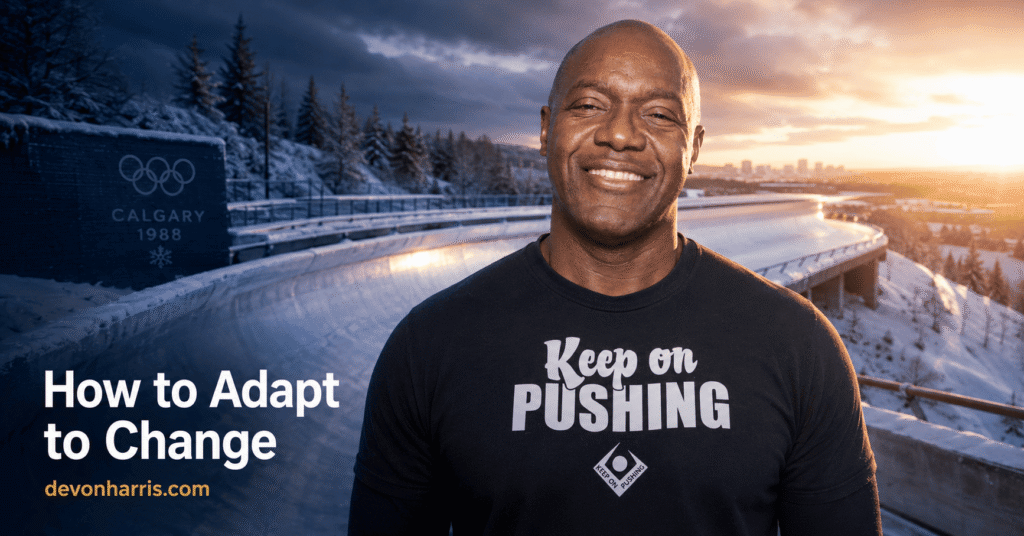
The first time I touched a bobsled, I was a Jamaican soldier who had never seen snow. The world laughed at the very idea of us — tropical islanders competing in a winter sport dominated by cold-weather nations with centuries of experience and millions in funding. But standing on that icy Olympic track, I learned the most valuable lesson of my life: knowing how to adapt to change is the single skill that separates those who thrive from those who merely survive.
Adaptation isn’t just a skill — it’s the master key that unlocks every door blocking your path to success.
Why Most People Struggle With How to Adapt to Change
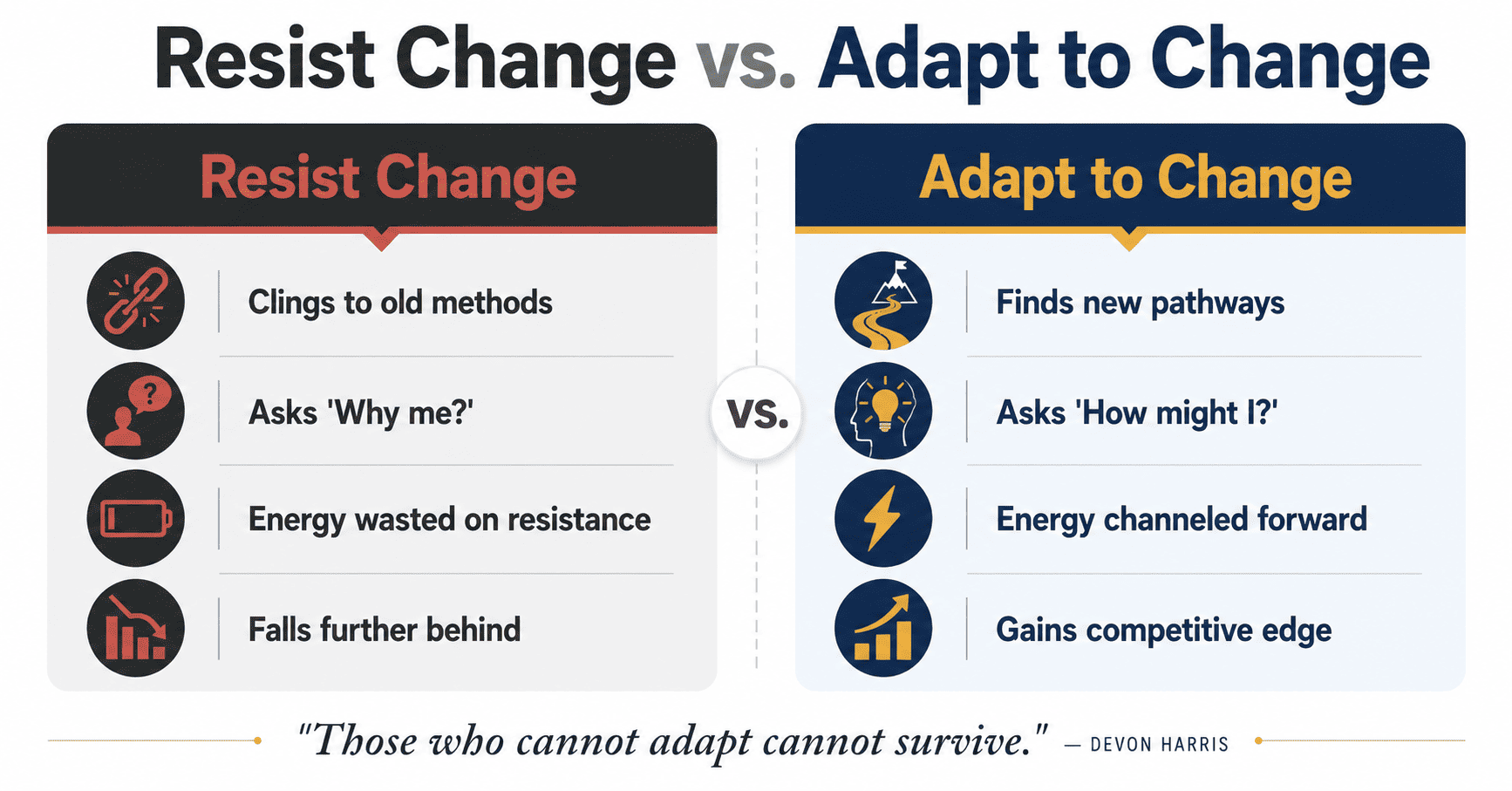
When circumstances shift unexpectedly — and they always do — most people instinctively resist. They cling to familiar methods, outdated assumptions, and comfortable routines, even when these very things are holding them back.
Consider this truth: every advancement in human history came from adaptation. Every breakthrough, innovation, and triumph emerged when someone looked at changing conditions and chose to evolve rather than entrench.
The most dangerous phrase in any language is “that’s how we’ve always done it.”
Research from Harvard Business School shows that companies demonstrating high resilience and adaptability outperformed their rigid counterparts by 37% during market disruptions. The same principle applies to individuals — those with adaptive mindsets report 29% higher career satisfaction and experience 64% less burnout during challenging transitions. Learning how to adapt to change isn’t optional anymore — it’s the defining skill of our time. If you’ve ever struggled with self-doubt during uncertain transitions, you’ll find my post on turning doubt into opportunity a powerful companion to these ideas.
How to Adapt to Change: 3 Core Capabilities Anyone Can Build
Our Jamaican bobsled journey embodied the principle of adaptation every single day. Without proper equipment, we trained by pushing a makeshift sled on flat concrete. Without snow, we practiced starts on wheels. Without experienced coaches, we studied videotapes of European teams obsessively. Each limitation became an invitation to adapt — not an excuse to surrender.
That experience taught me that resilience and adaptability come down to three core capabilities that anyone can develop:
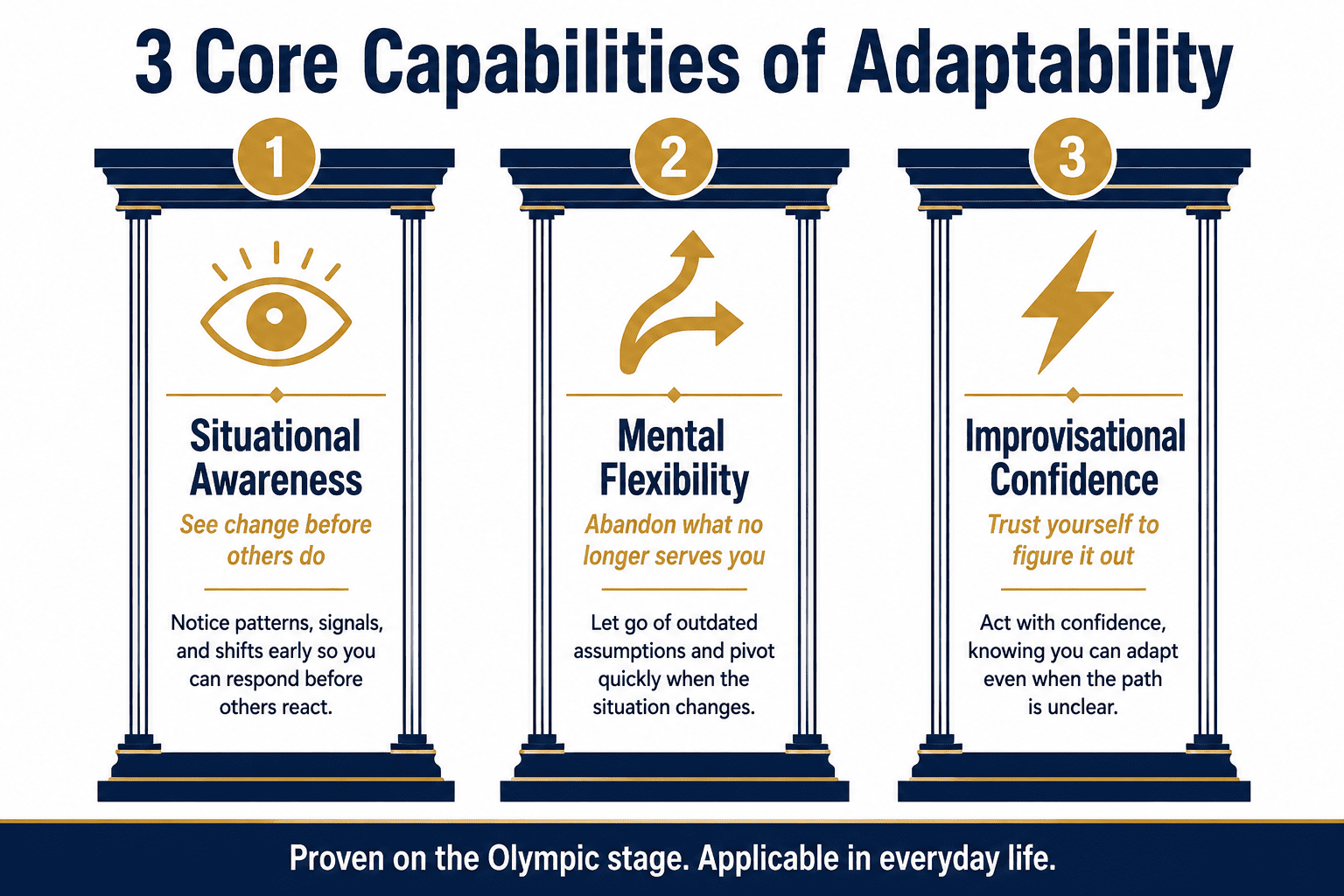
1. Situational Awareness
The ability to recognize when conditions have changed before others do. This means constantly scanning your environment with fresh eyes, questioning assumptions, and remaining vigilantly curious. Champions don’t wait for change to knock them down — they see it coming and adjust their stance before it arrives.
2. Mental Flexibility
The willingness to abandon invested approaches when they no longer serve you. This isn’t about being inconsistent — it’s about refusing to confuse methods with objectives. Your goal stays fixed. The path to it must stay fluid. This is precisely the mindset I explore in my post on gaining a new perspective to unlock growth — because the moment you loosen your grip on how things “should” be done, new possibilities emerge.
3. Improvisational Confidence
Trusting yourself to create solutions on the fly. Like jazz musicians who turn wrong notes into new melodies, adaptive individuals transform disruptions into opportunities. This confidence isn’t built overnight — it’s earned through repeated small acts of adaptation, each one proving to yourself that you can handle what comes next.
The Difference Between Those Who Excel and Those Who Stagnate
The difference between those who excel and those who stagnate isn’t talent or luck — it’s adaptability. In today’s accelerating world, yesterday’s solutions rarely solve tomorrow’s challenges. Every time you ask “how do I adapt to this?” instead of “why is this happening to me?”, you take back your power.
Think about how to adapt to change in the workplace specifically. The people who get promoted, trusted, and sought after aren’t always the most technically skilled — they’re the ones who stay calm, pivot quickly, and find a way through when others freeze. Adaptability is the new job security.
The same is true in your personal life. Relationships, health, finances, family — every domain of life will hand you unexpected change. Your response to that change determines everything that follows. This is why I also believe deeply in not fearing failure — because every failed attempt is just adaptation data telling you to try a different path.
One Practice to Start Building Your Adaptive Mindset Today
Starting today, embrace one small practice: when facing obstacles, resist the urge to immediately push harder using familiar methods. Instead, pause and ask yourself: “How might I approach this differently?”
This simple question activates your adaptive potential. It interrupts the autopilot of habit and opens a doorway to creative problem-solving. Over time, it becomes instinct — the way champions and great leaders naturally respond to adversity.
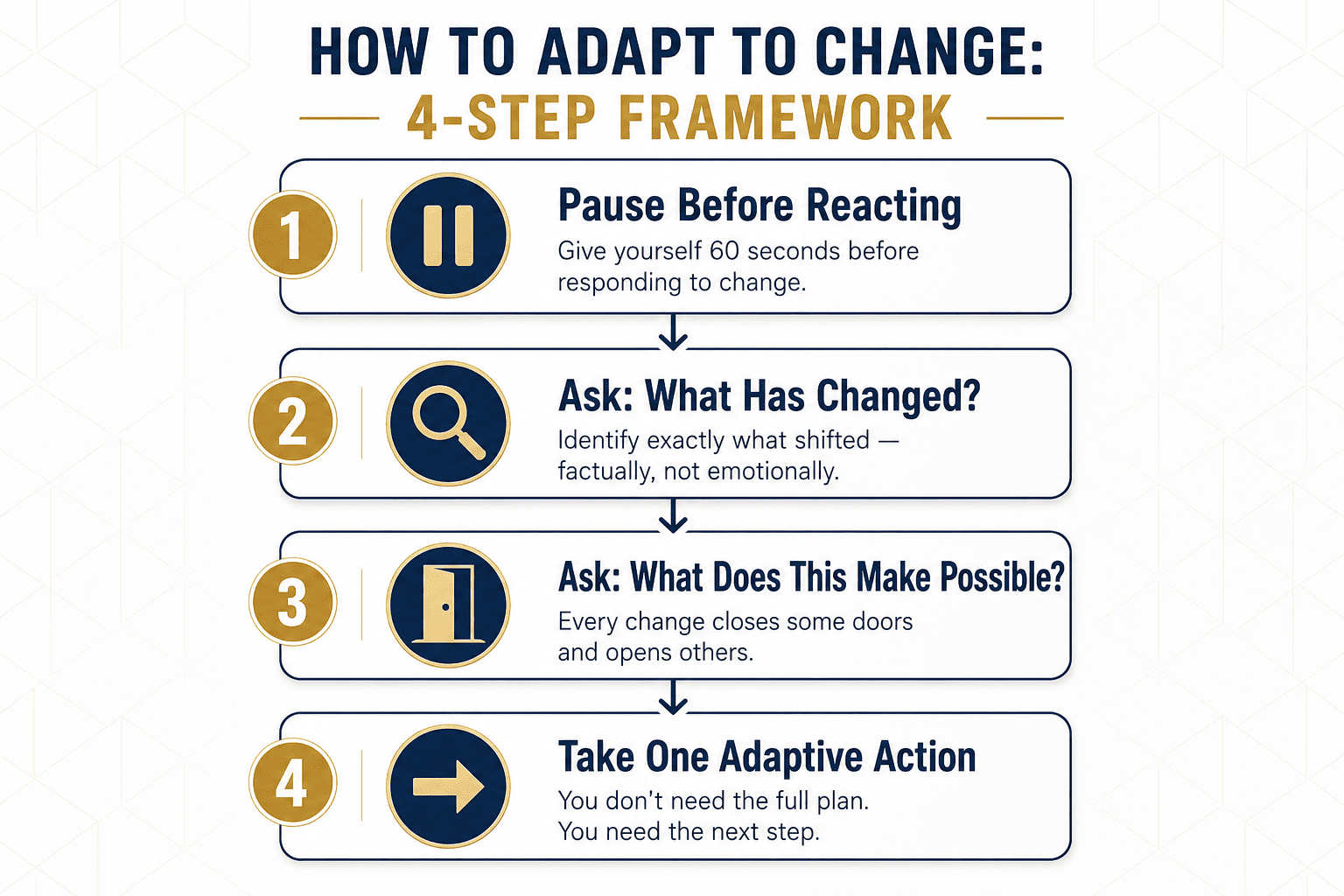
Here is a simple framework to apply it immediately:
- Pause before reacting. When change hits, your first instinct is usually resistance. Give yourself 60 seconds before responding.
- Ask “what has changed?” Identify exactly what is different — not how you feel about it, but what factually shifted.
- Ask “what does this make possible?” Every change closes some doors and opens others. Find the new door.
- Take one adaptive action. You don’t need the full plan. You need the next step.
Adaptation Is Not Surrender — It Is Mastery
Remember: adaptation isn’t abandoning your goals — it’s finding new pathways when old ones disappear. The Jamaican bobsled team never changed our goal. We changed everything else — our training methods, our mindset, our approach — until we found a way to reach that Olympic track.
The question isn’t whether change will come. It will. The only question is whether you’ll be shaped by it or shape it to your advantage.
Learning how to adapt to change is the greatest competitive advantage available to any person in any walk of life. It costs nothing. It requires only the willingness to see change not as a threat — but as an invitation.
Keep On Pushing!
Frequently Asked Questions
What does it mean to adapt to change?
Adapting to change means shifting your methods, mindset, or approach in response to new circumstances — while keeping your core goals intact. It is not about abandoning what matters to you, but finding new pathways to reach it when the old ones are no longer available.
How to adapt to change when it feels overwhelming?
Start small. When change feels overwhelming, focus on one question: “What is one thing I can do differently right now?” You don’t need to solve everything at once. One adaptive action builds momentum, and momentum builds confidence. The key is to act rather than analyze indefinitely.
What are the 3 core capabilities of adaptability?
According to Olympic athlete Devon Harris, the three core capabilities are: (1) situational awareness — recognizing when conditions have changed before others do; (2) mental flexibility — willingness to abandon invested approaches when they no longer serve your goals; and (3) improvisational confidence — trusting yourself to create solutions on the fly when no clear path exists.
What is the relationship between resilience and adaptability?
Resilience and adaptability are closely linked but distinct. Resilience is the ability to recover from adversity and keep going despite difficulty. Adaptability is the ability to change your approach in response to new conditions. Together, they form the foundation of high performance — resilience keeps you in the game while adaptability ensures you keep evolving how you play it.
How to adapt to change in the workplace?
To adapt to change in the workplace, practice three things consistently: stay curious about what is shifting in your industry and role; be willing to update your skills and methods even when your current ones feel comfortable; and build relationships with people who see change as opportunity, because their mindset is contagious. The most adaptable employees are not those who know the most — they are those who learn the fastest.