

How to Adapt to Change: Lessons From an Olympic Underdog
Learn how to adapt to change with Olympic athlete Devon Harris. Discover 3 core capabilities that build resilience and adaptability .
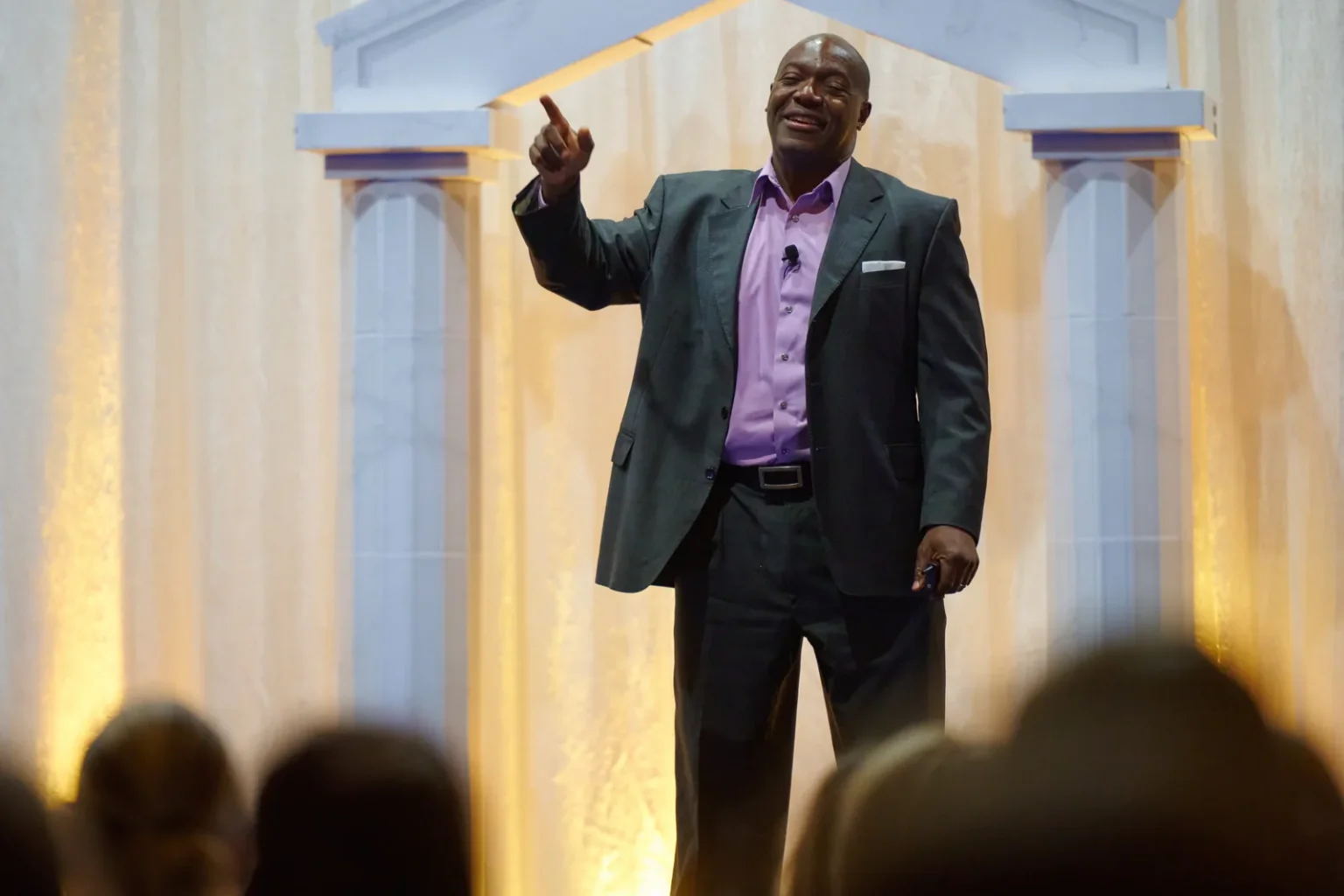
Two speakers can walk onto the same stage, at the same conference, holding the same microphone, and be doing two completely different jobs. That is the real answer to keynote speaker vs guest speaker. On a printed agenda the titles look interchangeable. In the room, however, they are not, and mixing them up is one of the quiet ways a well-planned event ends up feeling flat.
I wrote this guide for the people who build programs: meeting planners, association teams, HR and L&D leaders, and anyone whose job it now is to find a speaker. It covers what each role does, where each belongs on the agenda, how to brief them and how to choose.
The short answer
A keynote speaker delivers the main address that sets the theme for the whole event, usually to every attendee at once, at the opening or the close. A guest speaker comes in to cover one topic or one session inside the program, often for a smaller group. The keynote shapes the event. The guest speaker adds to it.
The word comes from music. The keynote is the note a piece is built on, and every other note is heard in relation to it. Events borrowed the idea. Merriam-Webster defines a keynote address as one that presents the issues of primary interest to an assembly, often “to arouse unity and enthusiasm.” In fact, that last part is the one planners feel most.
So a keynote speaker is the person you bring in to deliver that address. In practice, a keynote usually means:
Above all, a good keynote gives a room of people who may not know each other a shared story and a shared language. For example, say your theme this year is “Built to Adapt.” The keynote is where 800 people hear the same story about adapting and walk out with the same phrase in their heads. By the second afternoon, someone in a breakout session is quoting it back. That is the keynote doing its job.
It also manages energy. The first hour of a conference sets the mood for the next two days, and the last hour decides what people say about the event on the flight home. That is why those are the two slots where a keynote earns its fee.
A guest speaker is someone invited to speak on a specific subject, usually for one session. That might be a breakout at a conference, a lunch talk, a workshop, a panel, a team meeting or a class. In schools and universities, guest speaker is the everyday term for anyone invited in from outside to talk to students.
Guest speakers are often subject experts, for example a customer telling the story of how they use your product, a regulator explaining a new rule, a researcher sharing findings, or one of your own senior leaders. Some are paid. However, many speak for an honorarium, for expenses, or for the chance to reach your audience.
Still, the test of a good guest speaker is simple. Did the people in that room leave knowing how to do something they could not do an hour earlier?
Here is the keynote speaker vs guest speaker comparison side by side, the way most planners end up thinking about it once they have booked a few events.
| Keynote speaker | Guest speaker | |
|---|---|---|
| The job | Set the theme and the energy for the whole event | Add expertise or a fresh view on one subject |
| Who is in the room | Every attendee, usually in the general session | A track, a breakout room, a class or a team |
| Place on the agenda | The opening or the close, sometimes the start of day two | Anywhere in the program |
| Typical length | Often 30 to 60 minutes, sometimes with Q&A | Anything from a 10-minute talk to a half-day workshop |
| What they bring | One big idea, a story and a message people carry through the event | Practical, specific know-how on their subject |
| Tailoring | Built around your theme, your audience and your goals | Usually focused on their own subject |
| Booking and fee | A professional engagement, booked direct or through a bureau | Paid, an honorarium, expenses only or unpaid |
| What success looks like | People repeat the message weeks later | People leave able to do something new |
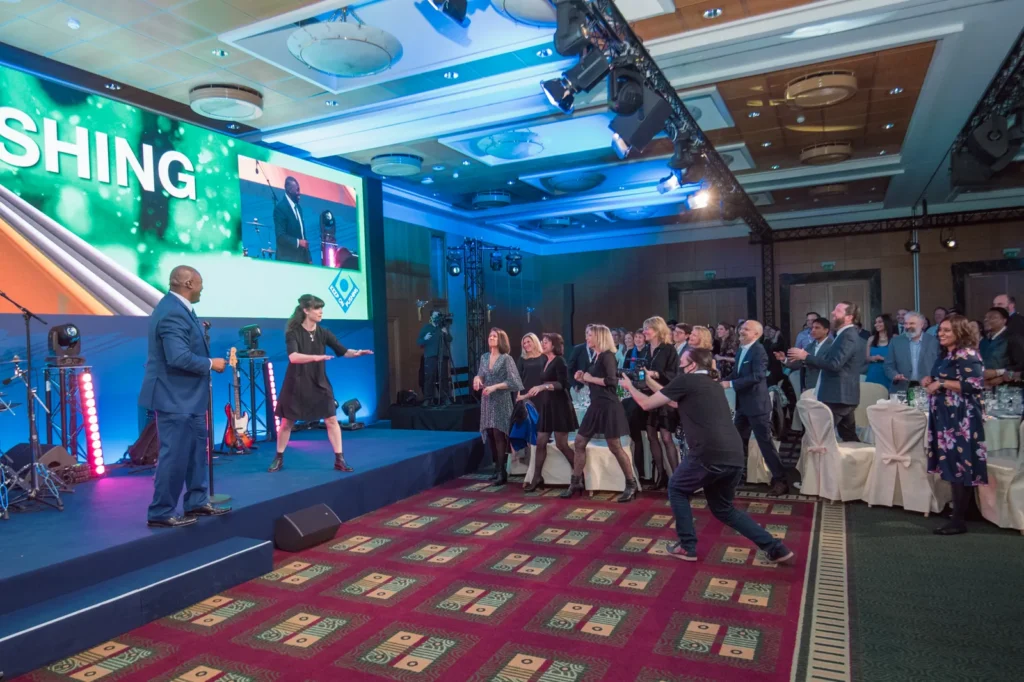
You hire a keynote speaker to move the whole audience in one direction. A guest speaker, on the other hand, delivers content on one subject. Both matter, so you measure them differently. Ask yourself what you want people to say when they walk out. If the answer is “I needed to hear that,” you are describing a keynote. If it is “I learned how to do that,” you are describing a guest session.
Unlike a breakout, a keynote has to land with everyone at once: the CEO and the new hire, sales and operations, the people who had a great year and the people who did not. A guest speaker usually speaks to a group that chose the session because they care about the topic. As a result, the speaker writes the talk differently. A keynote needs a story wide enough for the whole room. A breakout can go deep on one thing.
A professional keynote speaker tailors the talk. The speaker should know your theme, your audience, what kind of year it has been and what you want people to do next, and the talk should reflect it. A guest speaker usually stays on their own subject, and that is fine for their role. Problems start when you book a keynote and instead get a guest talk: a good presentation that has nothing to do with why everyone came.
Keynotes belong in the moments that set or close the mood: the opening general session, the start of day two, or the final session. If you are deciding between those slots, this guide to booking an opening and closing keynote speaker goes through the trade-offs. Guest speakers then fill the rest of the program, often running at the same time in different rooms.
A keynote fee covers more than the time on stage. It covers preparation calls, tailoring, travel and the speaker’s reputation. So when you compare quotes, ask what each one includes: a prep call, a custom version of the talk, Q&A, a virtual option, time with attendees afterwards. Guest speaker arrangements, however, vary much more, from paid sessions to an honorarium to expenses only. Either way, put the details in writing, including the date, the slot length and the recording rights.
Of course, not every event needs a keynote. A 40-person team meeting about a new CRM rollout needs someone who knows the CRM. A guest speaker is usually the better fit when:

Book a keynote when the whole audience needs to leave with the same message. That usually means the opening of a conference, an annual meeting, an all-hands after a hard year, a merger, a reorganization, or a sales kickoff keynote that has to set the tone for twelve months of targets. Associations book keynotes for the same reason, because the association conference keynote is often the one session every member attends.
Overall, a simple rule works for most events. If you want everyone in the room to leave with one message, you need a keynote. If you want a group to leave with a new skill, you probably need a guest speaker or a trainer. That one question settles keynote speaker vs guest speaker for most events.
Here is how the keynote speaker vs guest speaker split looks on a typical two-day conference. Your times will differ, but the pattern holds for most events.
| Time | Session | Who is in the room |
|---|---|---|
| Day 1, 8:30 | Welcome from the emcee | Whole audience |
| Day 1, 8:45 | Opening keynote | Whole audience |
| Day 1, 10:15 | Breakout sessions led by guest speakers | Smaller rooms, by track |
| Day 1, 12:15 | Lunch, sometimes with a short guest speaker | Whole audience or by table |
| Day 1, 1:45 | Panel or customer story | Whole audience |
| Day 2, 9:00 | Industry update from an internal leader or guest expert | Whole audience |
| Day 2, 10:30 | Workshops led by guest speakers | Smaller rooms, by track |
| Day 2, 3:30 | Closing keynote | Whole audience |
| Day 2, 4:30 | Wrap-up from the emcee | Whole audience |
Also notice the third role on that agenda: the emcee. A master of ceremonies hosts the program, introduces each speaker, keeps time and carries the thread from one session to the next. Some events book one person to give the keynote and serve as emcee, which keeps the message consistent from the first welcome to the final wrap-up.
Agendas use a handful of other titles. Here is what they usually mean:
In practice, the brief decides whether the booking pays off. A keynote speaker needs context, because the talk has to fit your event. A guest speaker needs a clear assignment. Of all the keynote speaker vs guest speaker differences, this is the one planners feel most in the room.
For a keynote speaker, share:
For a guest speaker, share:
This is not a question of status. It is a question of the job. One microphone, two very different jobs. Pick the one your audience needs, brief them well, and the program will hold together from the first welcome to the last round of applause.
I am a three-time Olympian and an original member of the Jamaican bobsled team that raced at the 1988 Winter Olympics in Calgary. Today I speak to companies and associations about resilience, leadership and teamwork, and you can see the full list of my keynote speaker topics on the speaking page.
My keynotes run 45 to 60 minutes with Q&A, in person, virtual or hybrid. I can also serve as your emcee or add a leadership session to the keynote. Before every event I do a prep call with the planner and send a short survey, so that the talk fits your theme and your people. Tailoring is part of the keynote, not an extra. I have spoken on five continents, and when I spoke at IBM the audience gave a standing ovation and the session was rated among the highest IBM had seen over the years.
If you are planning an event, the speaking kit has the introduction, the video and the planning timeline. You can read what past clients say in the client testimonials, or learn more about booking an Olympic speaker. When you are ready, send your date, location and audience, and my team will reply within 24 hours with availability, fee and format options.
No. In the keynote speaker vs guest speaker question, the difference is the job. A keynote speaker delivers the main address that sets the theme for the whole event, usually to every attendee at the opening or close. A guest speaker comes in to cover one subject or session inside the program, often for a smaller group.
Usually, yes. The keynote is the headline address of the event, and the event marketing often features the keynote speaker. Some conferences have two keynotes, one to open and one to close.
Most keynote speeches run between 30 and 60 minutes, and some add a short Q&A at the end. A guest speaker slot can be much shorter, or a longer workshop.
Yes, if the talk is built for the keynote job: speaking to the whole audience, connecting to the event theme and giving everyone one shared message. What makes it a keynote is the role on the agenda, not the speaker's title.
Often. An opening keynote usually comes right after the welcome, so that it can set the tone for the sessions that follow. A closing keynote comes at the end to send people home with one clear message.
A plenary session is any session that the whole audience attends. A keynote is usually the headline plenary, but a panel, an awards segment or a leadership update can also be plenary sessions.
Not always. Motivational describes the style and the content of the talk. Keynote describes the role on the agenda. A motivational speaker can deliver your keynote, and many keynotes are motivational, but an economist giving the main address is also a keynote speaker.
It depends on the goal. For example, if the goal is a new skill, a guest speaker or trainer may be the better fit. If the goal is to get everyone in the room behind one message, a keynote can work for a group of 40 as well as 4,000.
Devon tailors every keynote to your audience, your theme and the challenge in front of them.
Learn how to adapt to change with Olympic athlete Devon Harris. Discover 3 core capabilities that build resilience and adaptability .
Learn how to focus on the solution not the problem with Devon Harris. The Olympic mindset shift that turns every obstacle into an opportunity.
Devon Harris shares Olympic lessons on staying positive during hard times and finding real growth inside the struggle.